Category: Uncategorized

  • Chickens!

    Early in March we decided that hatching some chicks would be a fun project for springtime.  We got eggs from Mary at http://www.fosterpoultry.co.uk/  Two Light Sussex hybrid eggs and four Cream Legbars.  The Cream Legbars are great since you can sex them shortly after they come out of the egg.  Males often have a white spot on the head and girls are more stripy.

    Incubator construction

    Ingredients:

    • A foam box (glued together from a larger foam box)
    • A 25W light bulb and holder (inserted in the right hand side of the box)
    • A heat mat (left over from reptile cage – I believe it is not really necessary)
    • Some wire mesh to suspend the eggs (about 1 inch above the heat mat) and to stop the chicks burning themselves on the light.
    • A bowl for the humidifier/kitchen rag
    • A IV line for inserting water into the humidifier
    • A small Halogen bulb (10W)
    • A 1-wire humidity/temperature sensor.
    • 1x USB controlled relay + PSU to drive the halogen heater

    So we construct the box with some contact adhesive and covered any cracks with packing tape.  We make two inspection holes in the top and taped them inside and outside to create “double glazing”.

    We use a dimmer to set the temperature in the box to ~35°C and rig the computer to control the gap to about 37-38°C by switching on and off the halogen bulb.

     DSC_0021
    Fig. 1: The complete setup.

    The humidifier is created from Lego Mindstorms.  A single motor runs for 0.1s every 15-120 depending on requirement and pushes the plunger of a 50ml syringe attached to the IV line.  NQC source code on github: https://github.com/gbusker/rcx-dose-pump

    DSC_0024
    Fig. 2: The Lego Mindstorms humidifier


    The wait

    Once the eggs are placed we still spend quite some time controlling temperature and humidity.  The temperature is easy – except that after a few days we realise the Raspberry Pi is not stable enough and we switch to the kitchen laptop.

    Humidity control is hard at first and only becomes stable once we place a kitchen rag in the humidifier bowl.  By dosing water into this we can control humidity to within a few percent.  Note that we don’t actively control humidity – we just set the water injection rate by selecting an RCX program that does a small dose every 15,30,60 or 120 seconds.

    Below you can see the temperature and humidity profiles.  We didn’t so so well with humidity because we controlled it manually in the 10 days and then had some issues with reprogramming the RCX (via crappy IrDA link).  The humidity profile in the last week is as it should be – increase humidity before hatching.

    month-tempmonth-humi
    Fig. 3-4: Temperature and Humidity profiles over the incubation.

    Hatching!

    And then … just before Emma’s 10th birthday party a small pip appears ….DSC_0020

    After dinner chirping and pip turns into hole ….
    DSC_0057

    During “Jurassic Park” a hole turns into a crack …
    DSC_0058

    And finally a tired chick falls out
    DSC_0059


    24 hours later he/she seems quite happy in the brooder.DSC_0095


  • First Post

    Quite amazingly I’ve only now started a blog after seeing how useful it can be as a way to post information onto your site 🙂 Not a lot to tell right now.

  • Firth of Clyde 2003

    Just the photos

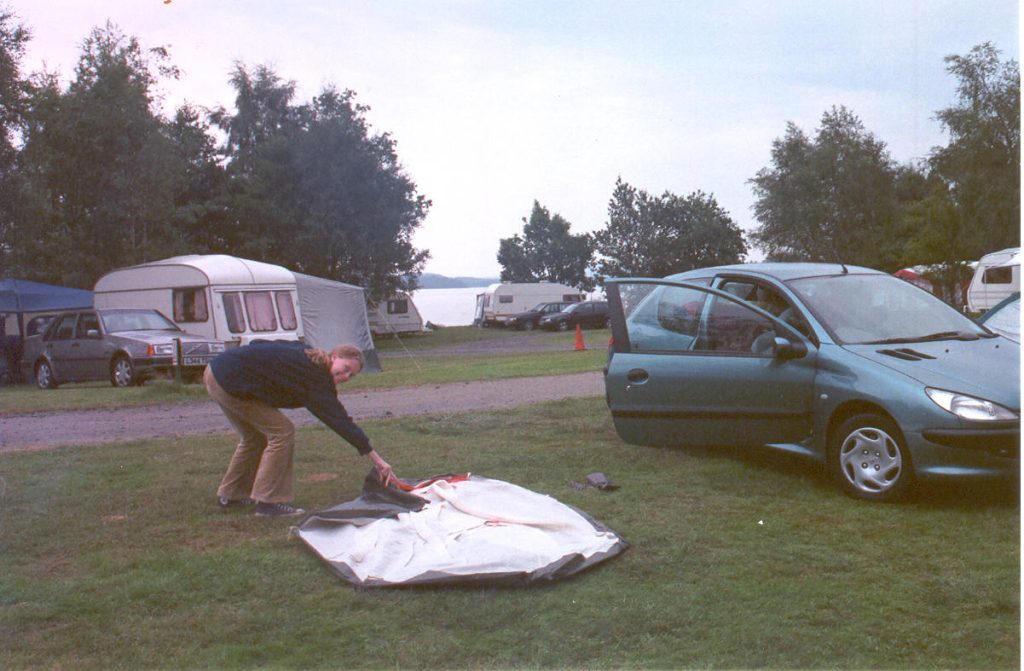
    Since sailing hours have not come easily in the last few years, I suggested to my girlfriend that instead of the usual torture we call holiday (see other pages on this site) we do a relaxing week of sailing. We usually do very cheap holidays, so this was going to be an expensive one in comparison with a hiking holiday. Jane had no heavy weather gear, mine was falling appart, a boat is not cheap to rent. To reduce the cost a little and to make the experince a bit more interesting we chose to charter from Rhu in SW Scotland. It was excessively hot in London — all sorts of records had been broken — and we took off with a full car, via Wolverhampton, Colin’s parents and two campings, to Rhu.

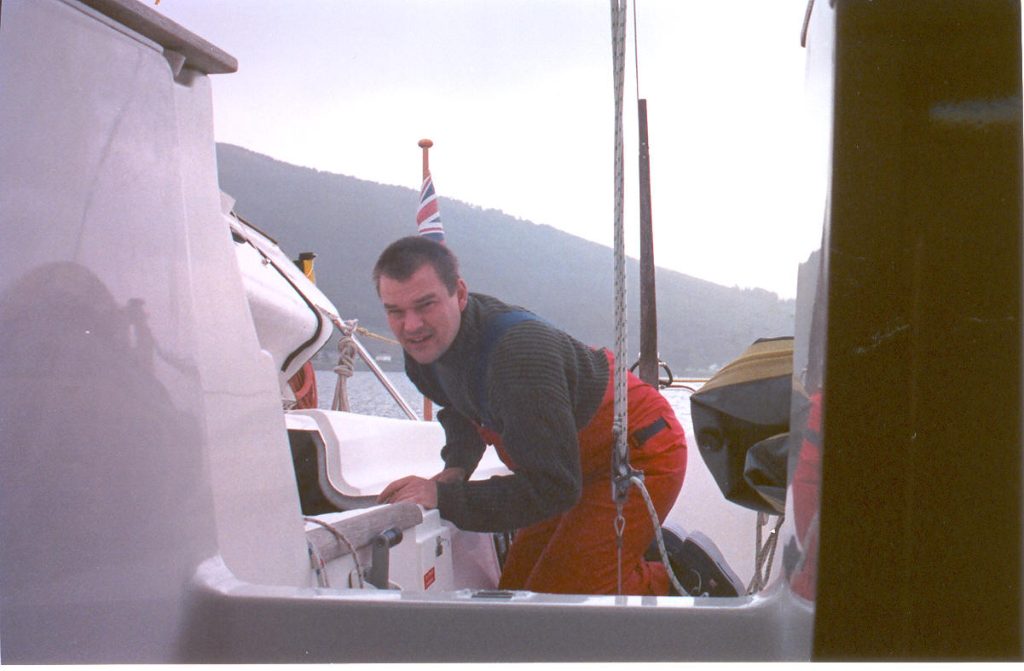
    We had had some rain in the tent, but on the day we picked up “Kate”, the sun was shining, winds were light and we slowly unpacked and got our ship ready for its first trip with us. This was easy, “Kate” came well equiped, the charter company was very helpfull and Dufours are generally simple functional ships.

    We had planned our trip to “Holy Loch” late in the afternoon, to arrive well before dark, and probably pick up a mooring outside the new marina. The weather report mentioned the possibility of some strong winds, but this seemed unlikely.

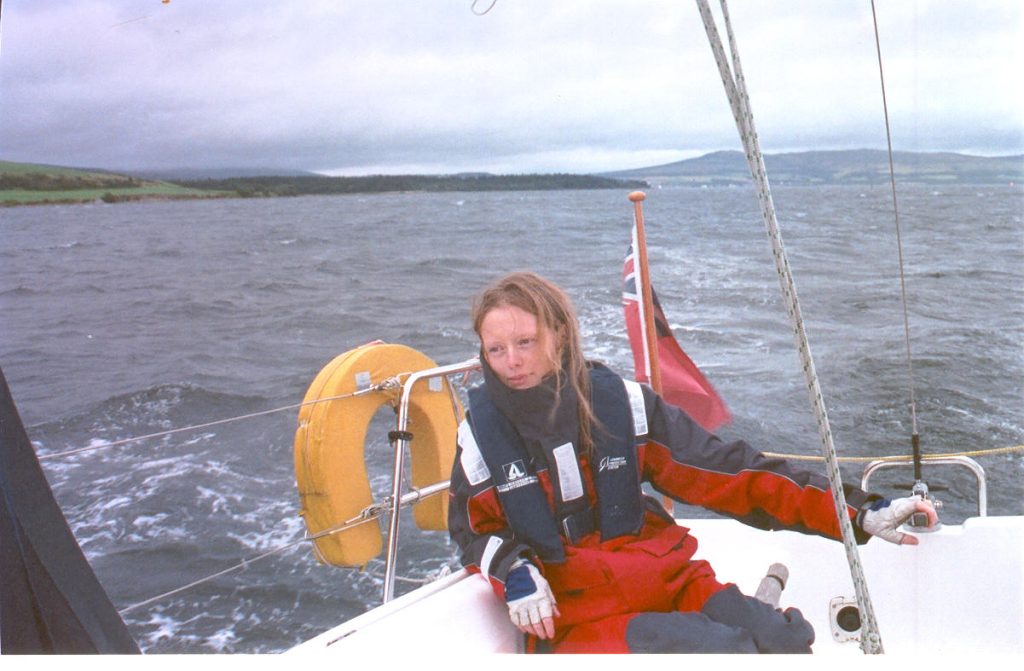
    Everything stowed away inside, seacocks that matter closed, Jane starts the engine and we are off into Gareloch. Just on the small genua to start with; we’ll put up the main when we need to sail up the Clyde to Holy Loch. Winds quickly increase to 6-7 Bft and I was not prepared enough to get 2nd reef in quickly. In any case, it’s late and we want to sleep, so we switch on the engine and steam into the wind for 2 hours to Holy Loch. Continuous rain, but very little traffic.

    My first night on a mooring. The ship swings a lot. Maybe I should have taken the mooring line closer. Every minute the view out of the window is different. Handy to see if we haven’t broken off the mooring yet.

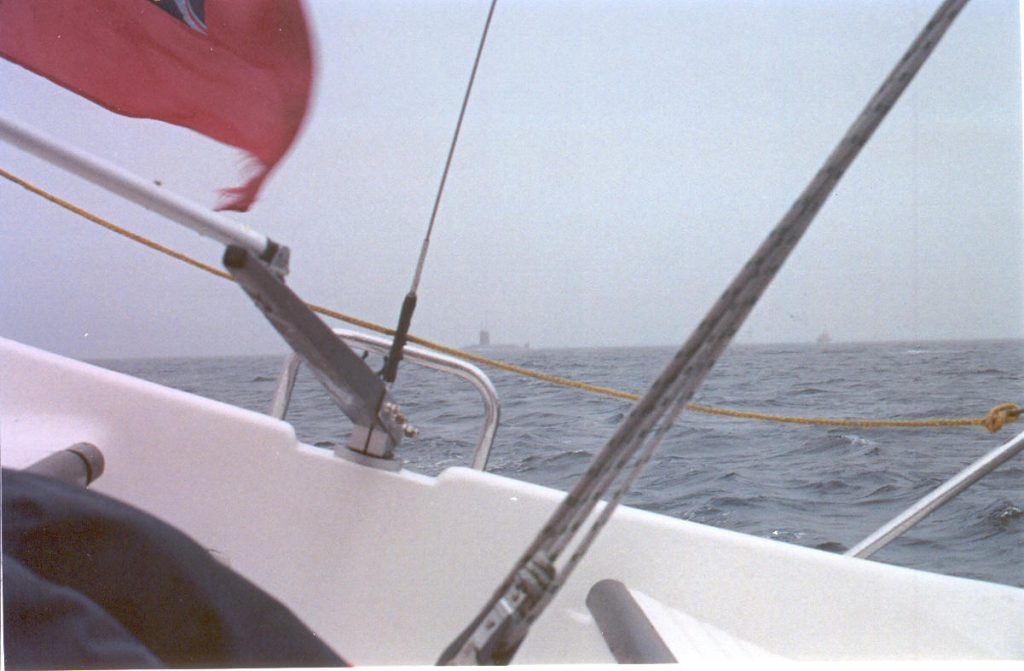
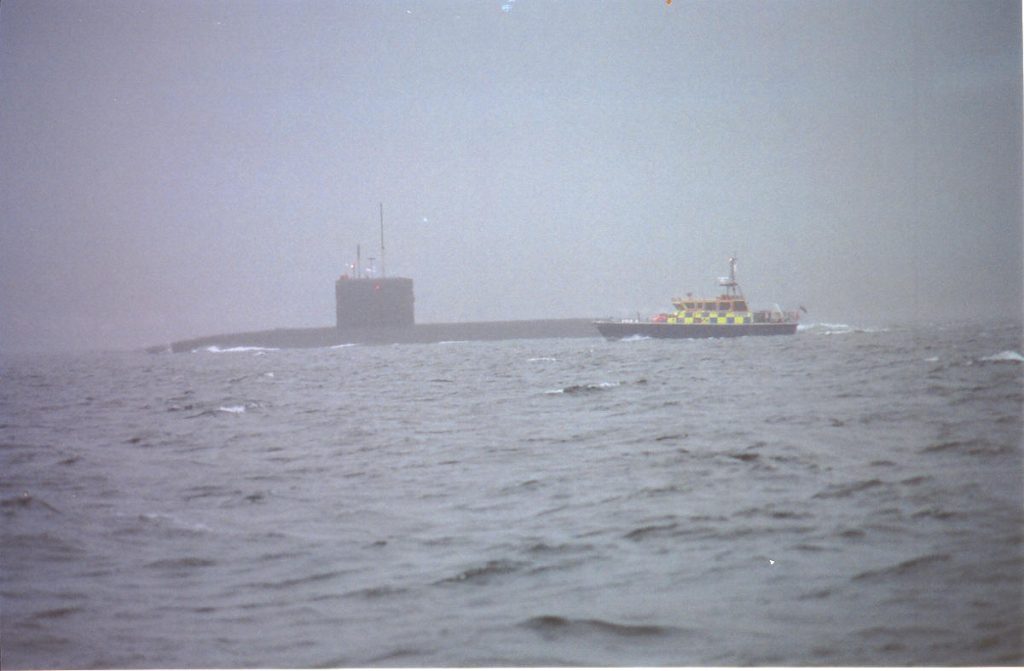
    The next day proved quite eventful. Even though the trip was close hauled tacking against a SSW wind down the Clyde with lots of waves and rain, we saw dolphins and a massive submarine. The fotos are a bit grey because there was continuous rain that day. Shortly before the tack for the final leg into Rothesay sound Jane is a bit sick 🙁

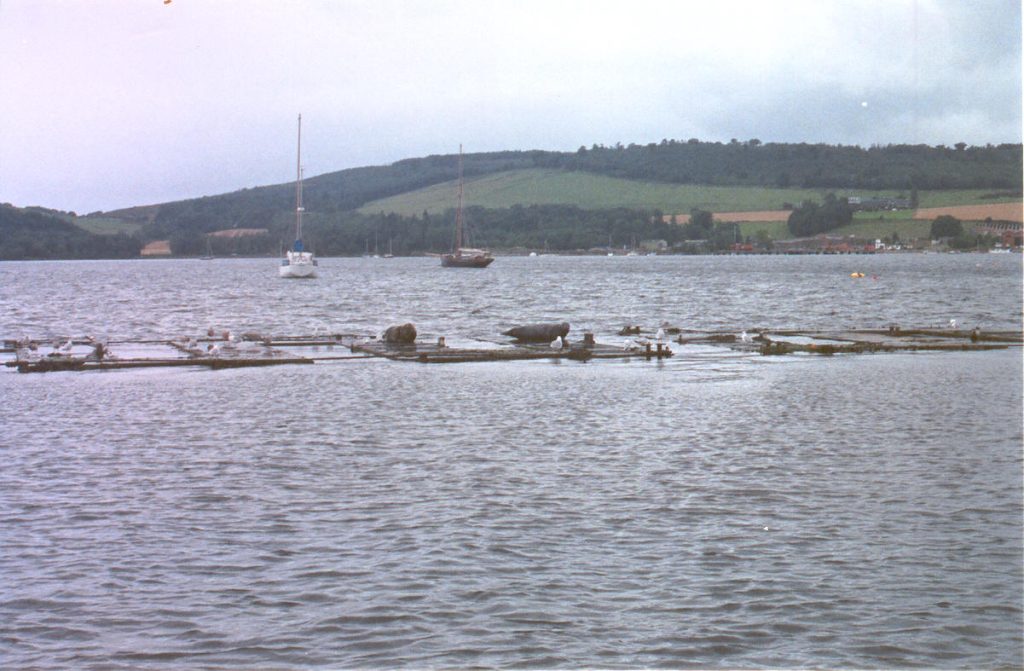
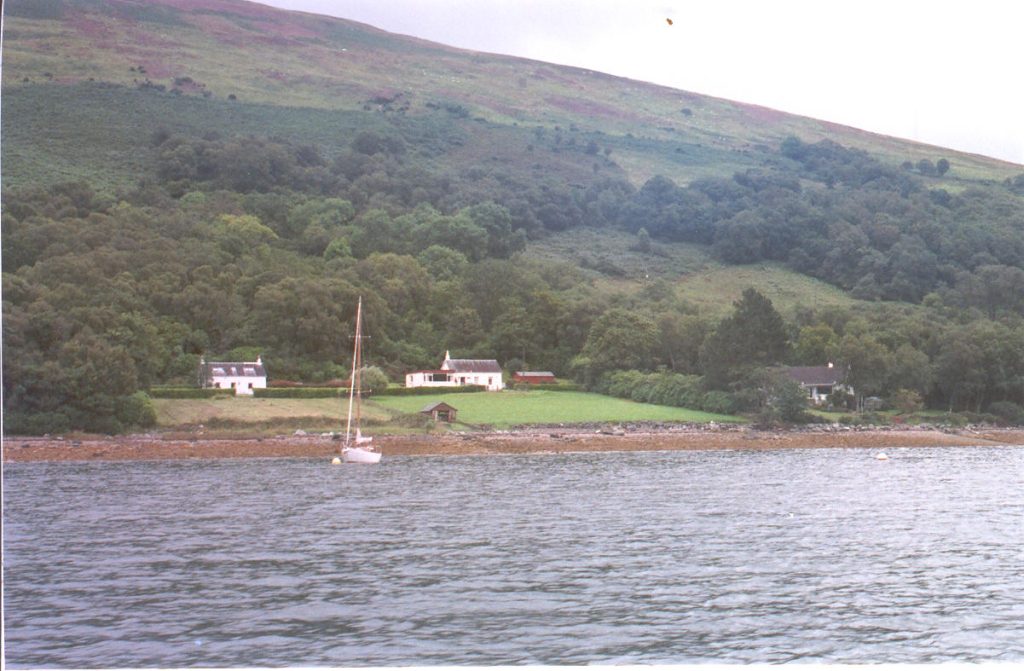
    Out of Rothesay it’s a quick run into the East Kyle (Kyle is scottish for “straight”) and Burnt Isles. Lots of lazy seals here. Still haven’t seen any in the water. Lunch anchored past the Isles and then we motor the first part of the West Kyle because we need to make it into Tarbert before dark. The second part of the W Kyle is sailed, but the wind dies down for a while and we slowly get our first view of Arran. Inchmarnock water is confused, but light winds take us to Tarbert in 2 hours. Tarbert is brilliant, but the weather forecast is doubtful and persistent rains are predicted. The waterproofness of my coat is also doubtful. Not too bad for 20 year old Musto gear, I guess.

    So a day of lazing, going for coke & haggis (freshly caught!), visiting the remains of a castle and lying in bed and listening to the rain is very welcome.

    Today is the day that we will attempt to go round Arran. Wind predictions are not so good, so we will probably have to motor a bit tonight. It’s nice and warm and we anchor for lunch in Torrisdale bay.

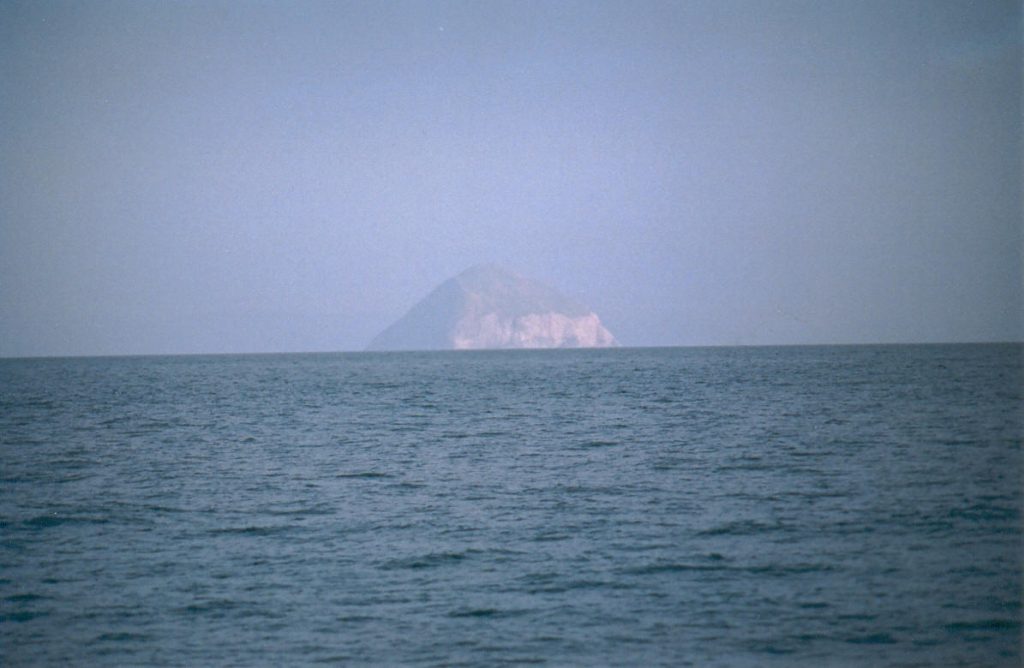
    From then on Alsa Craig is visible and will remain so all day. In the end we have to motor all the way from Pladda to Lamlash harbour and still arrive in the dark.

    We row ashore to get nice breakfast goodies and the lady in the shop asks “Are the midges out yet?”. We quickly row back and leave this dangerous place. Very light winds, we barely touch 2 knots a few times but the weather is nice and sunny. Lots of dolphins are playing around and I spot a small whale.

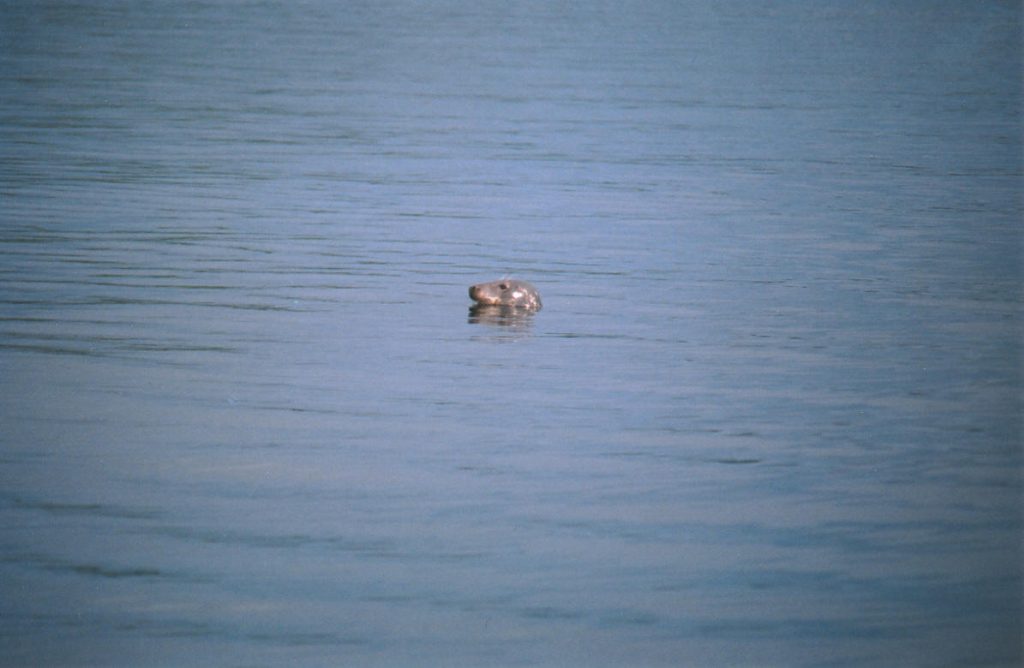
    And then, on the way to Rothesay from Arran, in the middle of the Firth of Clyde, a seal! It was very confused why we turned back to have a look at him.